I Was Looking for WiFi. I Found the Town Trump Took Cell Service From Instead.
A dispatch from Sugar Grove, VA. — 610 people and three illegal slot machines.
We drove past the tall yellow factory beside the highway. Inscribed on its side, behind a waving American flag, were two large signs imposing themselves on all who drove by: “Jesus is Lord,” and “SCMW,” short for Smyth County Machine & Welding. We were in southwest Virginia, in the very bottom corner of the state. Towering green trees abounded, and were surely contributing to the complete lack of cell coverage on our phones.
We were desperately searching for internet. My girlfriend, Theresa, was on a mission to take advantage of an online sale that expired at midnight to get her brother a gift.
We also needed to fill up on gas (we always need to get gas). My ‘96 F-250 gets 13 miles per gallon. “There are many benefits to stopping so much,” I tell myself. For example, cheap gas station hot dogs, and, when the internet stops working on the road, a chance to reconnect.
As we pulled off the highway and the trees grew denser and taller, my hopes of reconnecting in time to do some online shopping dimmed. We took a left, and an opening formed. We were welcomed to Sugar Grove by one of their two Baptist churches. A few hundred feet down the road, we passed a side street named Lead Mine Road.
“Maybe it’s like leader. Lead. Mine, possessive,” Theresa quipped.
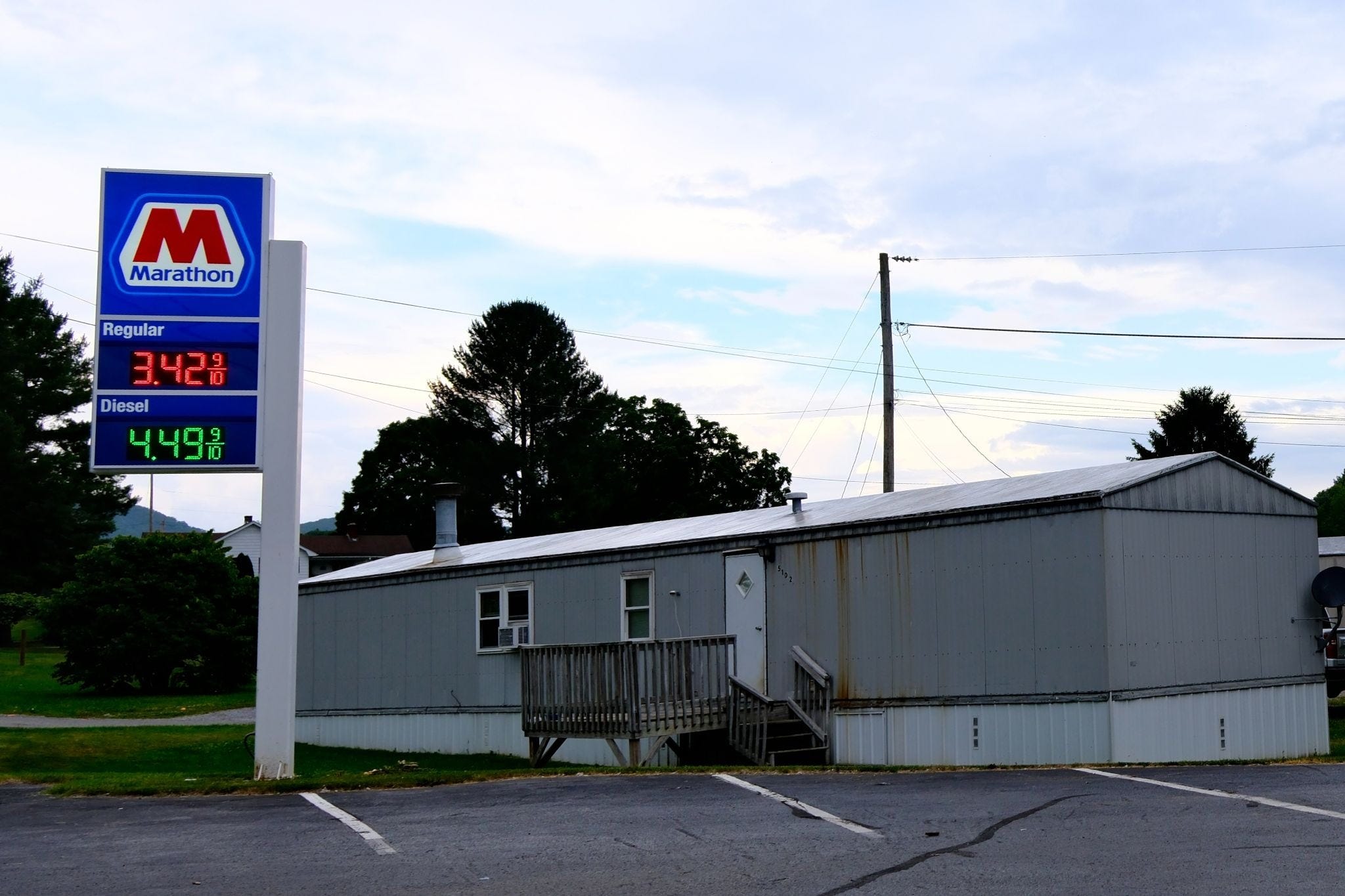
We drove past a trailer park that sat next to the gas station. Each trailer was tin-clad, the tin looking as old as my 1977 camper or older, with streaks of rusty water draining down the sides. A boy, maybe twelve years old, sat in a tire swing attached to one of the tall trees, his neck craned down, staring at a phone by himself.
The gas station had advertisements for the Virginia Lottery, one as a lawn sign by the road and the other, a faux-neon sign in the store window. Noticing I still didn’t have internet on my phone, I went inside.
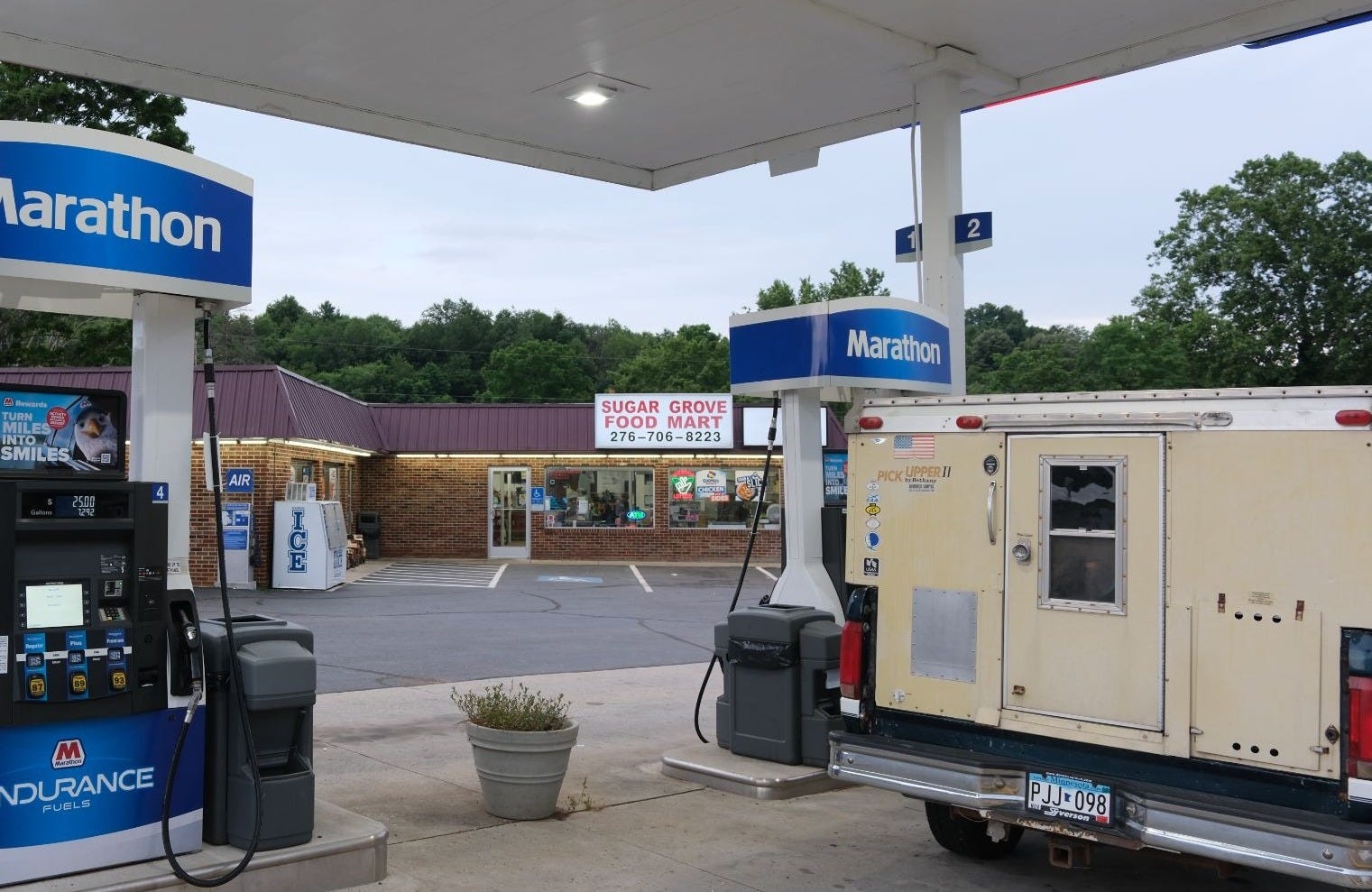
This time, I was not greeted by a church. Instead, three virtual slot machines, standing almost as tall as the ceiling and brighter than the faux-neon, stood at the door. The machines wrapped themselves around two patrons.
A white man in a tank top — the kind once referred to as a wife beater — gambled quietly. A black woman with wispy hair rapidly tapped at the colorful screen with both hands. I could feel that something was wrong here, and that I should not photograph them.
I turned toward the attendant.
“Excuse me, ma’am, my girlfriend and I... She has Verizon and I have T-Mobile and we can’t find a signal anywhere.” I paused. “What do people here do for internet?”
A smile formed on her face as I spoke. It said, “This guy isn’t from here,” in a deep Southern accent.
The woman, maybe fifty years old, once white but now suntanned brown, gestured back up the highway. “Well, you can head back towards Marion. It’s about nine miles that way. Otherwise, people here don’t have internet anywhere other than their house — if there.”
“Wow. So if you leave the house, you can’t connect anywhere?”
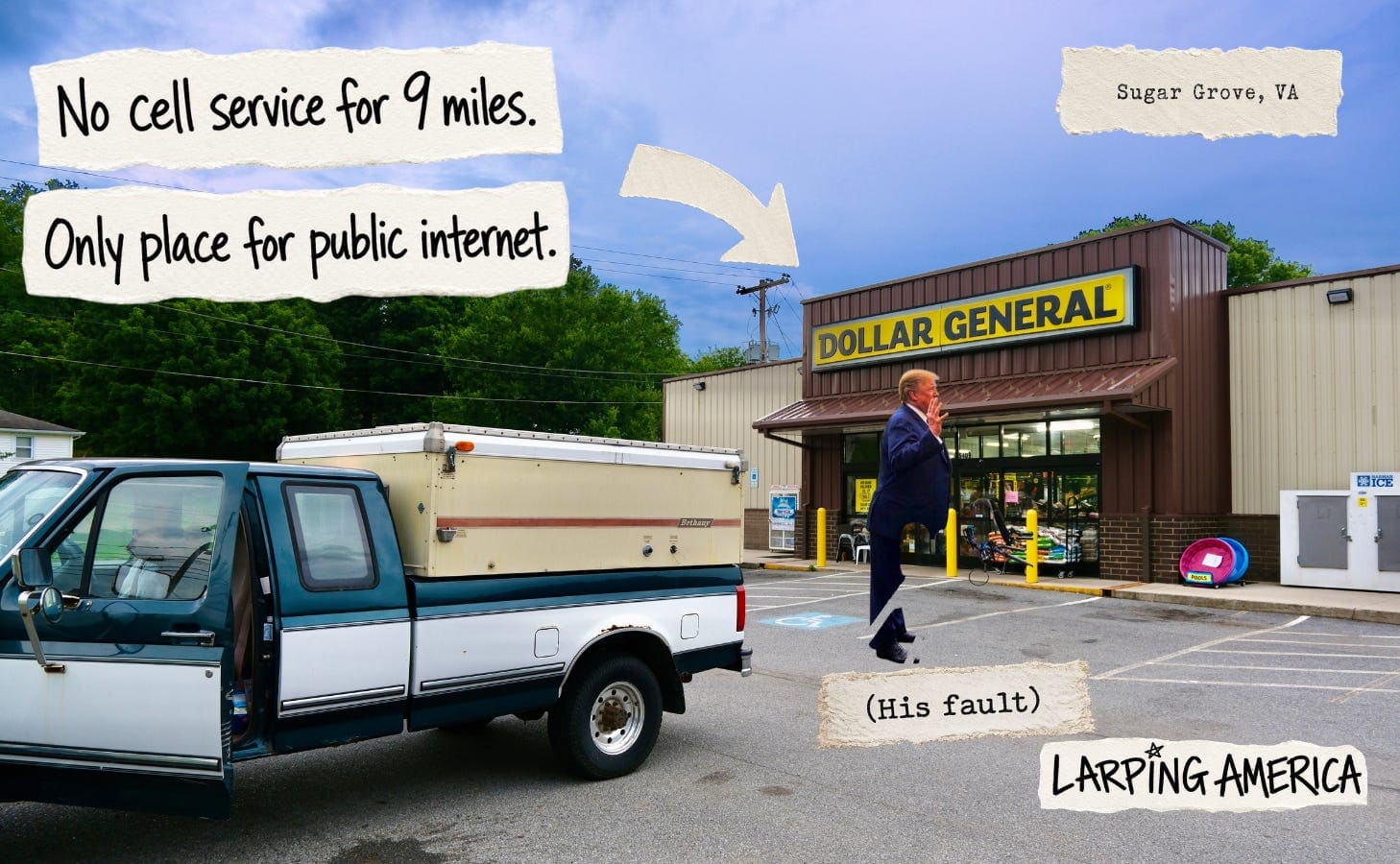
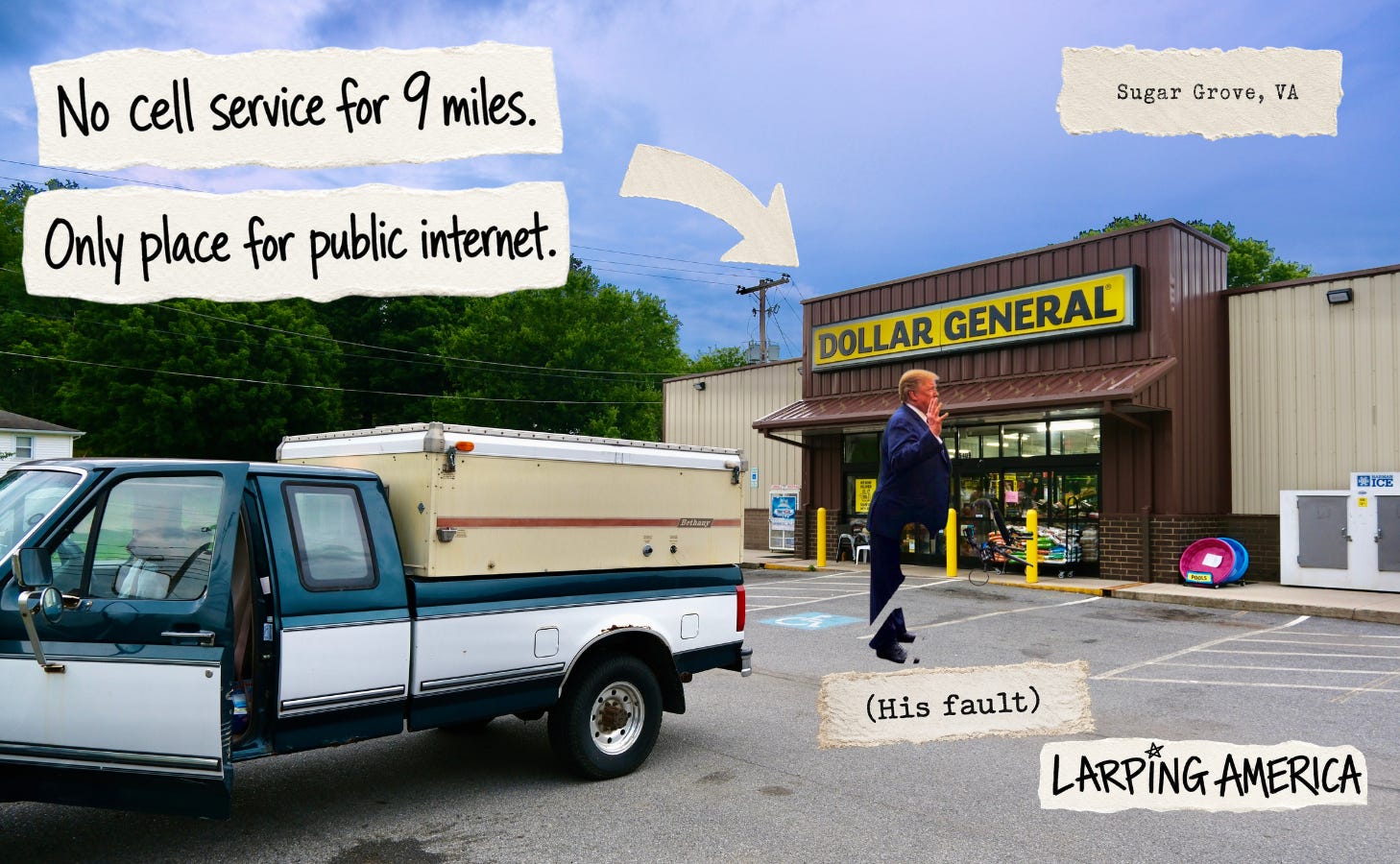
“Yeah, ‘cept Dollar General. They have open WiFi.”
Her coworker, a man standing maybe four feet tall, wearing a grey muscle tee that revealed his sleeve tattoos, chimed in: “That’s ‘bout the only place in town.”
“These machines…” I gestured toward the digital slots, where the woman was still scratching at the glass with both of her hands. “How long have they been here?”
“Few years.”
“I’ve never seen anything like this before, except in Vegas.”
“Yeah?” the woman said with her smile.
“How does the state allow it?”
“Well, the lotto threw a fit. But the owner wanted them.”
I thanked the attendants for their time. Maybe one day there will be a new street in Sugar Grove, when Lead Mine becomes dated: Digital Gas Station Slot Machine Avenue.
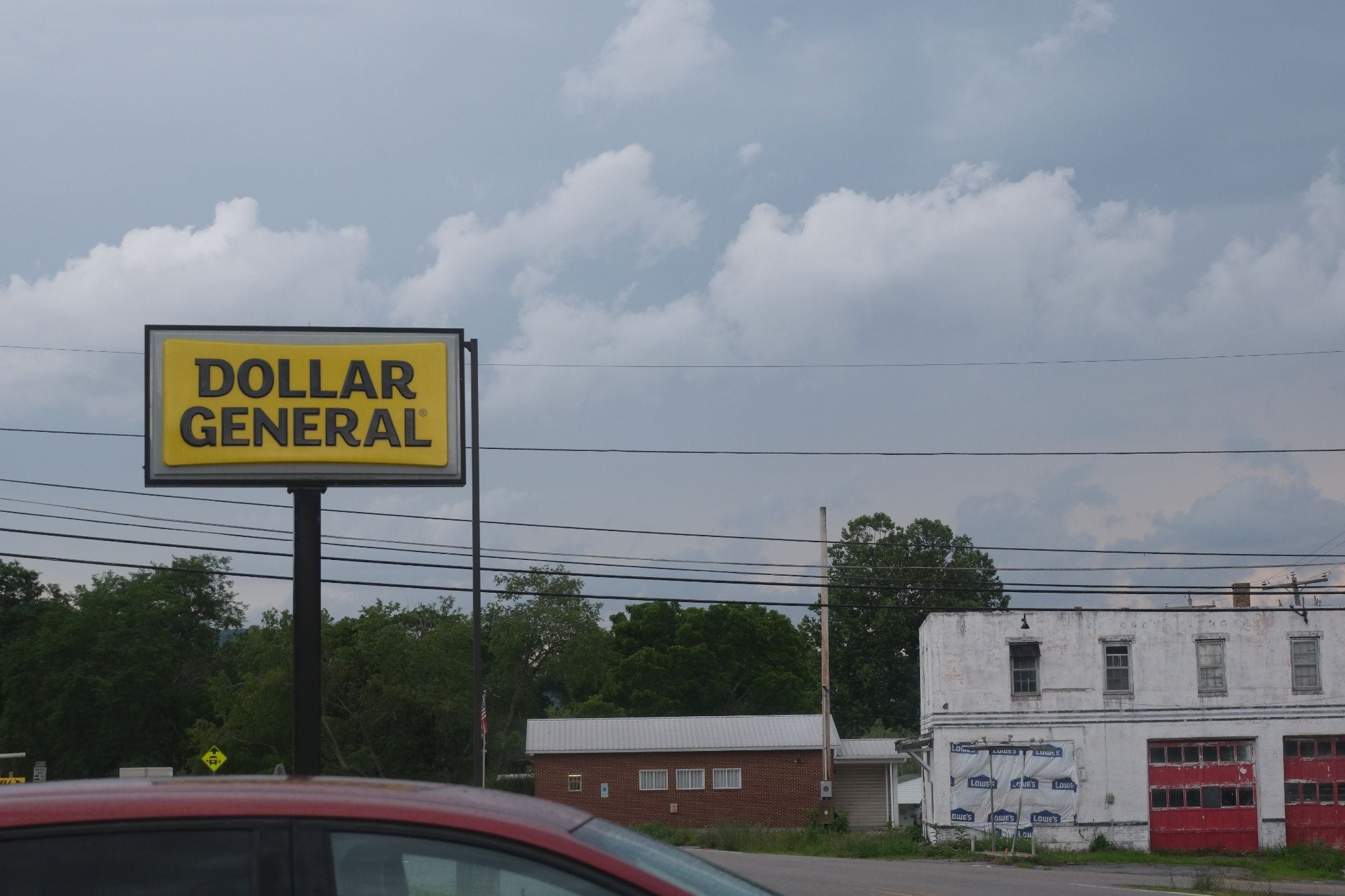
We arrived at the Dollar General. Men with rusty trucks sat in the parking lot, myself included. Still without a cell signal, Theresa was thankful for the store’s WiFi. She connected and placed her order. I bought a pint of Häagen-Dazs for $5 even.
I tried to learn more from the cashier, a larger, suntanned white woman in her thirties, as I checked out. “I appreciate you guys doing the free WiFi. I don’t know what my girlfriend and I would have done without it.”
“Yeah, it’s great.”
“I just talked to somebody up the road. There’s really no cell signal anywhere in town? Not even a little?”
“There used to be, but it stopped when — I think it was T-Mobile? — combined with US Cellular.”
I nodded, and she continued: “Well, there are a few spots. It’s one of those towns where, when you find a signal, you stop. Like my fiancé’s house. He lives a few miles that way, and you’ll get it right in the doorway and just stand there.”
“Wow. What if there’s an emergency? Is anybody working on this? Getting some internet in town, or some cell coverage?”
She smiled. “Not that I know of.”
We were only passing through Sugar Grove because we were on our way to Scales Campground, 4,000 feet up in the Appalachian Mountains. Rain poured down on us as we ascended in the dark. I would not call the divots in the road potholes — this was not a road that was expected to be flat. These were cavernous pits, often filled with water and mud, that my truck would fall into, and bounce back out of. I had only ever seen roads like this in rural Mexico or Kenya.
Theresa remarked, counting each item on her fingers: “If only we had a motorcycle, nicer truck, or a horse.”
All in all, the four miles took us an hour and a half and put us only ten miles from Sugar Grove. We arrived at the campsite shortly after nightfall.
When we got to the top of the mountain, I could feel the air change. It was cooler and kinder up there. Stars were out, and their faint light showered down onto fellow truck campers. We parked next to a $50,000 off-road rig equipped with Starlink, a full kitchen, and what appeared to be a designer dog.
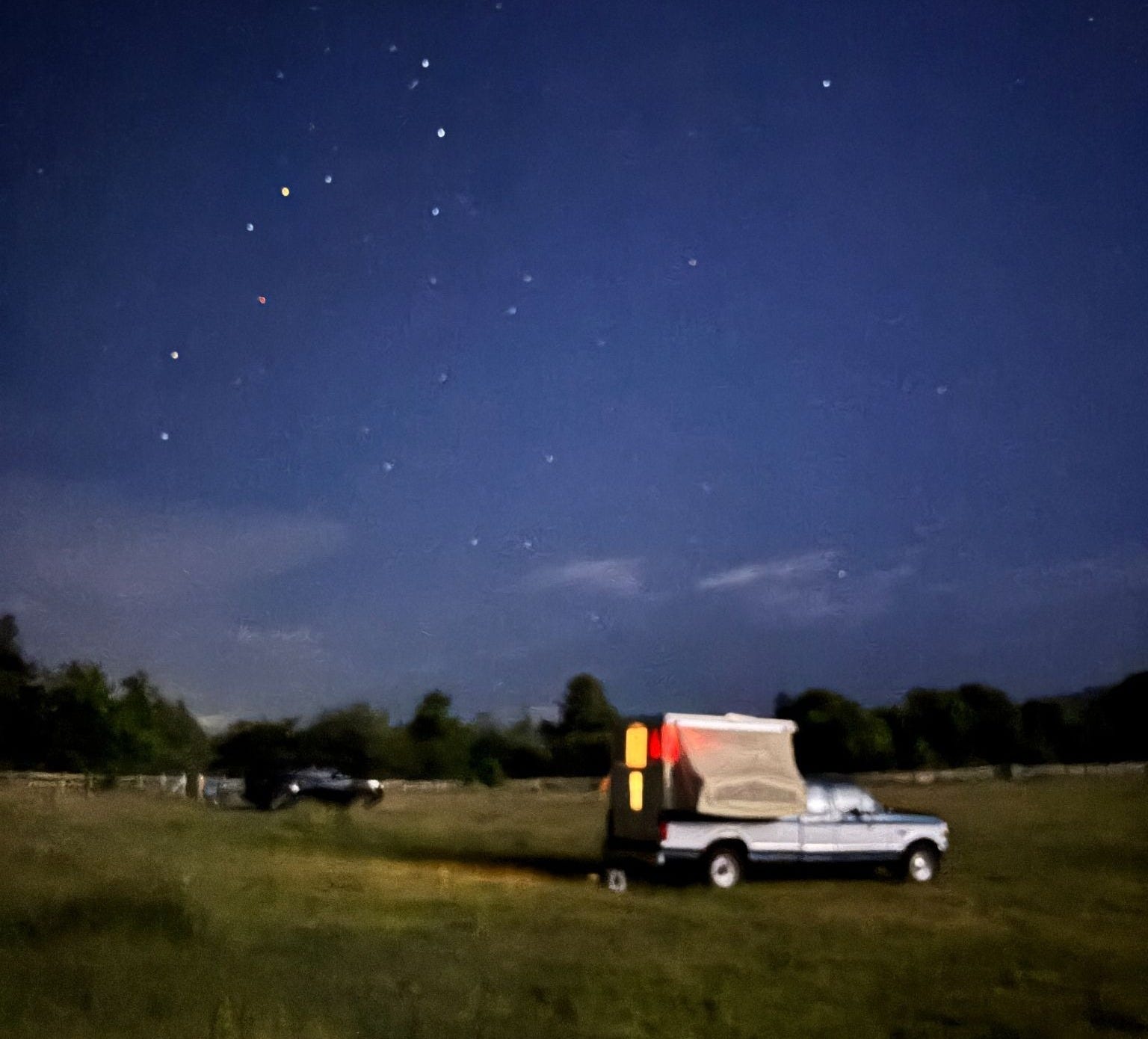
We read the park signs by flashlight before we set up camp. We had unknowingly chosen a site that sat on the Appalachian Trail. We were just ten miles from Sugar Grove, but tourists from all around the world passed through here. Nearby, there was a horse-riding experience; we could make out the wooden posts meant for them.
And, through the darkness, we managed to see wild ponies, the main attraction of the site, grazing the fields behind us. There was a fence built to keep the ponies out of the human enclosure.
I heard what sounded like a buzz. Then a ping. I looked down at my phone. We had not found internet or cell in Sugar Grove, home to 610 people and a road named for a mine that gave out a century ago. No, we found it 4,000 feet up the mountain at the Instagram-worthy tourist destination.
Three bars of 5G.
Post Mortem
Several things about Sugar Grove stood out to me. In order: the slot machines, the complete lack of cell or internet, the Dollar General worker discussing — casually — a corporate telecom merger, and a road named after a lead mine. I spent the next few days in the Appalachian Mountains researching all four on my high-speed hotspot. Two of these issues turned out to be the same story.
First, the slot machines.
What the attendant described — “the lotto threw a fit” — is the Virginia Lottery, which opposes the machines in her store for one reason: they compete. The signs outside are government gambling, and the proceeds fund public schools. The machines inside are private gambling, and they are illegal. The Virginia Supreme Court upheld the state’s ban in 2023, and the machines stayed plugged in anyway. When the state briefly taxed them around the pandemic, about 13,000 were counted in convenience stores, 70 percent in lower-income zip codes.
I went looking for a Trump connection. Do not worry: the digital slot machines are bipartisan. Their biggest operator, Pace-O-Matic, kept the machines on for years through a Republican senator’s law firm, then showered $1.7 million on Virginia Democrats, who promptly filed a bill to legalize 25,000 of them. Governor Spanberger vetoed it this spring; the $50,000 to her inaugural committee apparently didn’t change her mind. The machines are still on.
Second, the lack of cell and internet. This one is not bipartisan. The Dollar General cashier had it exactly right.
T-Mobile completed its $4.4 billion purchase of US Cellular — the carrier that covered much of rural America — on August 1, 2025, and that is the likely reason Sugar Grove’s signal died. It was predicted: before the deal closed, industry groups and labor warned the Trump administration that it could trigger shutdowns of rural towers kept alive by federal subsidies.
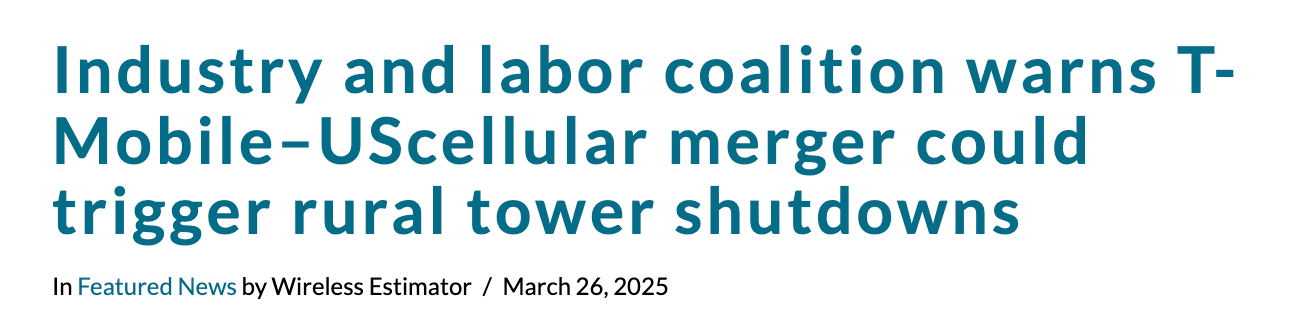
The FCC cleared the deal anyway, attaching no rural coverage requirements.
The only commitment that appears to have mattered came two days before approval, when T-Mobile wrote the FCC chairman promising to end its DEI programs, “not just in name, but in substance.”

T-Mobile has since written a check of its own: it is among the corporate donors funding Trump’s $300 million White House ballroom, while its business often sits in front of his regulators.
Smyth County, where Sugar Grove sits, voted for Trump by sixty points, among the most pro-Trump counties in Virginia. These are his people. His administration had the industry’s warnings in hand, approved the deal that disconnected the towers, and collected a DEI rollback for culture warriors in suburbia and D.C., plus a ballroom check in return. Whatever that is, it is not democracy. It is not fair. It is not right.
As for when I asked the Dollar General worker if anyone was working on getting them internet: Virginia announced fiber money for 27,450 unserved locations in Smyth and two neighboring counties in 2021, under its Democrat governor. By late 2024, the state’s own watchdog found two-thirds of those broadband projects behind schedule under the Republican governor who inherited them. In June 2025, the Trump administration rewrote the federal program supporting these efforts; analysts expect a year or more of new delay, with money shifting from fiber to satellite. The biggest name in satellite internet is Starlink, run by Elon Musk, who spent hundreds of millions of dollars to elect Trump.
Which means that both ends of Sugar Grove’s disconnection — the carrier that unplugged the town, and the company positioned to sell the satellite fix — belong to Trump donors.
Lastly, Lead Mine Road. In the 1890s, the Rye Valley Mining Company dug lead, zinc, and gold out of the hills above Sugar Grove. A railroad was run to town and a hundred-ton mill went up before the lead ran thin; the land now belongs to the Jefferson National Forest. I had a hunch that there would be lead in the water or soil.
The truth is worse: nobody seems to know what runs in Sugar Grove’s pipes or sits in the earth below it.
Most households out there drink from private wells and springs that no federal agency regulates or tests; when Virginia Tech ran a drinking-water clinic in Smyth County (the most recent test I could find was 15 years ago), more than half of the sampled households tested positive for coliform bacteria and 41 percent for E. coli. Sugar Grove itself went on a boil-water notice when a line burst near the Dollar General. That’s all I could find.
The pattern of extraction from the people of Sugar Grove holds at every level. The mine’s profits left; who knows what’s in the water. The slot machine profits accrue to the owner and its likely out-of-state operators; the ills of gambling will sit in that community for decades. And votes were extracted from Sugar Grove, likely four to one, for Trump. Trump, in turn, approved the merger that took away their cell and internet coverage for the benefit of a quarter-trillion-dollar carrier and a South African-born trillionaire.
Ultimately, I don’t care that Sugar Grove voted for Trump. No American should have to stand in a doorway to tell their family they’re safe. The FCC that approved this, the carrier that profits from it, the state that keeps announcing fiber internet — someone get these Americans the basic utilities they have a right to.
Immediately.
LARPing America is a series of dispatches from a summer spent living out of a 1996 Ford and a 1977 camper. Previously: Go Shawty, It’s Your Birthday — celebrating America’s 250th in the Vermont wilderness with 17.5 Kenyans. Website: LarpingAmerica.com